
North Kanchenjunga Base Camp Trek

Nepal, Kangchenjunga Region
Popularity: Reviews
Challenging
Available Departures: Spring and Autumn
18 days
Trip Code: KNBCNP

North Kanchenjunga Base Camp Trek

At a glance
  • Trip Start: Kathmandu
  • Trip End: Kathmandu
  • Trek Start: Taplejung
  • Trek End: Taplejung
  • Maximum Altitude: 5183m
  • Group Size: 4-16
  • Accommodation: Teahouse / Homestay
  • Meals: Standard
  • Service: Full board
  • Accommodation Info: 4 night Hotel & 14 night Teahouse

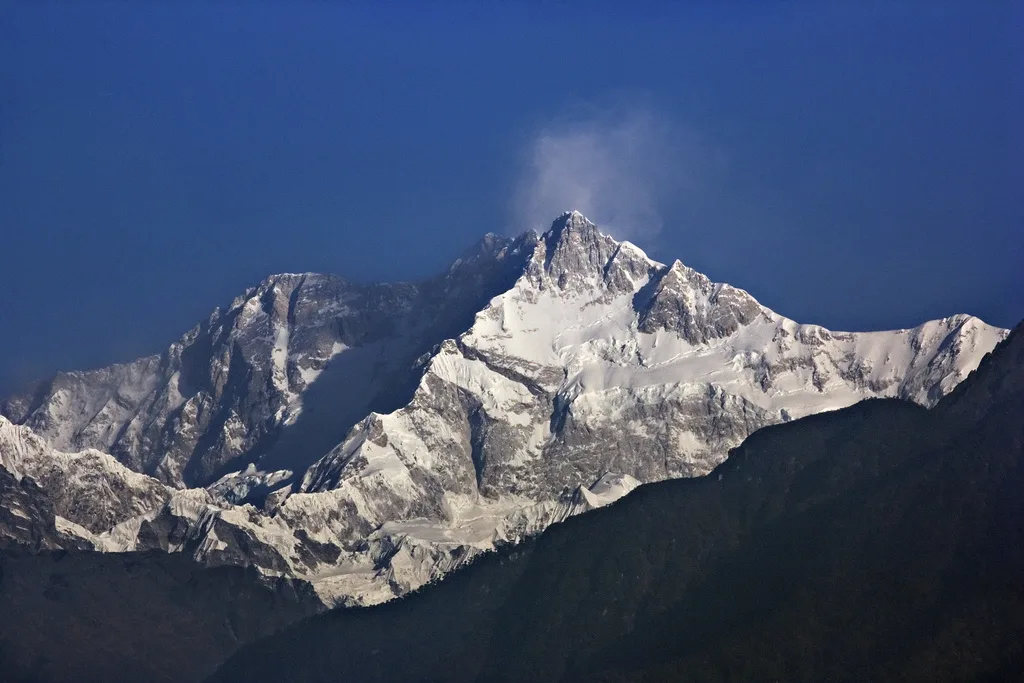
Just below the looming Mt. Kangchenjunga (8586 m), lies the Kangchenjunga Conservation Area. Spread in an area of 2035 sq. km, the area is made up of alpine grass lands, rocky outcrops, dense temperate and sub-tropical forests, and low river valleys with the Kangchenjunga as its crown.

Situated in north eastern Nepal in Taplejung District, the conservation area is bordered by the Tibet Autonomous Region-China in the north, Sikkim-India in the east and Sankhuwasabha District in the west.

In 1998, the Department of National Parks and Wildlife Conservation and WWF Program together launched the Kangchenjunga Conservation Area Project to implement biodiversity conservation and sustainable development.

During the spring season, the area has an excellent display of flowering rhododendrons, orchids, lilies, primula and many other flowers. The lowlands are full of tropical hardwoods. These get replaced by oaks and pine as the elevation increases. Further higher is the vegetation including larch, fir and juniper up to the tree line. Kangchenjunga Conservation Area harbors rich diversity of wildlife including the endangered snow leopard, Himalayan black bear, musk deer, and red panda. Other animals in the area include the blue sheep, and many others. Impheyan pheasant, red-billed blue magpie, shy drongo are some of the many birds found in the area.

The conservation area has a lot of ethnic diversity and culture. As the original settlers of the Upper Tamur Valley, the Limbu are the dominant ethnic group in the lower regions. The Sherpa/Lama people are in the higher altitude where they arrived from Tibet more than four hundred years ago. There are lots of Monasteries, chhortens, temples, prayer-walls which become the icons of the conservation area’s cultural heritage.

For an excellent view of the Mountain Kangchenjunga, you should reach the North base camp where a place called Bangpema is the excellent point for observation of the mountain. To make a circular trek you will have to pass through the Celele Pass at an altitude of about 4000 m to drop to Tseram from where you head toward the South base camp, another excellent observation point of Mt. Kangchenjunga. Kangchenjunga which lies in the far eastern boarder line of Nepal and Sikkim. It has been well known being visible from Indian summer resort of Darjeeling. It was opened for the trekkers recently and fewer trekkers are regulated each year.
Itinerary

Arrive at Tribhuvan International Airport (TIA). You will be met by your trekking agency representative and transferred to your hotel.

Altitude: 1,350 m / 4,430 ft

Transportation: Private airport pickup vehicle

Accomodation

3-star hotel in Kathmandu

Meals

Welcome dinner at a traditional Nepalese restaurant

Distance

N/A

A dedicated rest day while your trekking agency takes your original passport, visa copy, and passport-sized photos to the Department of Immigration to process your mandatory Kanchenjunga Restricted Area Permit. You can spend the day relaxing, buying last-minute trekking snacks/gear in Thamel, or visiting cultural heritage sites like Boudhanath or Kathmandu Durbar Square.

Altitude: 1,350 m / 4,430 ft

Transportation: N/A (Optional taxi for sightseeing)

Accomodation

3-star hotel in Kathmandu

Meals

Breakfast

Distance

N/A

Take an early morning domestic flight from Kathmandu to Bhadrapur (~45 minutes). Upon arrival in the lowlands, hop into a private Jeep for a long, scenic drive scaling up through rolling tea gardens toward the mountain market town of Taplejung.

Altitude: 1,820 m / 5,971 ft

Transportation: Domestic flight + private 4WD Jeep

Accomodation

Local guesthouse/teahouse

Meals

Breakfast, Lunch, Dinner

Fly

45 minutes

A bumpy but breathtaking off-road drive alongside the roaring Tamor River. The route passes through traditional Limbu and Sherpa villages, terraced farms, and dense green hills to reach the small settlement of Sekathum.

Altitude: 1,650 m / 5,413 ft

Transportation: Private local Jeep

Accomodation

Local teahouse

Meals

Breakfast, Lunch, Dinner

Drive

4–5 hours driving

Your first official trekking day. The trail follows the steep and narrow valley of the Ghunsa Khola. You will cross several high suspension bridges and ascend uphill through dense bamboo and rhododendron forests to reach the high pasture village of Amjilosa.

Altitude: 2,498 m / 8,195 ft

Accomodation

Basic teahouse

Meals

Breakfast, Lunch, Dinner

Time

5–6 hours walking

Distance

~9 km / 5.6 miles

The trail continues through dense forests and isolated river banks before climbing steeply up a rugged stone staircase out of the gorge. The landscape softens as you arrive at the Tibetan settlement of Gyabla.

Altitude: 2,725 m / 8,940 ft

Accomodation

Basic teahouse

Meals

Breakfast, Lunch, Dinner

Time

4–5 hours walking

Distance

~7 km / 4.3 miles

The valley opens up wider today. You will pass through the ancient village of Phole, a Tibetan refugee settlement known for its potato fields and small monastery. An easy couple of hours past Phole brings you to Ghunsa, the largest Sherpa village in the valley.

Altitude: 3,415 m / 11,204 ft

Accomodation

Teahouse

Meals

Breakfast, Lunch, Dinner

Time

5 hours walking

Distance

~10 km / 6.2 miles

A mandatory rest day to adapt your body to the thinning air. You can take a short acclimation hike to a nearby ridge for sweeping views of Yamatari Glacier and Mt. Phole, or explore the local village lifestyle.

Altitude: 3,415 m / 11,204 ft

Accomodation

Teahouse

Meals

Breakfast, Lunch, Dinner

Distance

Optional short walks

The trek leaves the tree line behind, venturing into alpine territory. You will walk along rocky scree slopes, lateral moraines, and cross frozen glacial streams with magnificent views of Mt. Jannu dominating the skyline.

Altitude: 4,145 m / 13,599 ft

Accomodation

Basic alpine teahouse

Meals

Breakfast, Lunch, Dinner

Time

5–6 hours walking

Distance

~10 km / 6.2 miles

Your second structured rest day to ensure safety before attempting altitudes above 5,000 meters. Spend the morning taking a gradual hike up toward the Jannu Viewpoint or the nearby glacial lakes to prompt deeper breathing.

Altitude: 4,145 m / 13,599 ft

Accomodation

Basic alpine teahouse

Meals

Breakfast, Lunch, Dinner

Distance

Optional short walks

The trail climbs steadily over massive boulder fields and glacier debris. The valley opens into a high, windswept sandy plain surrounded by towering peaks. The high-altitude outpost of Lhonak sits right on the edge of the active glacier.

Altitude: 4,780 m / 15,682 ft

Accomodation

Basic alpine teahouse

Meals

Breakfast, Lunch, Dinner

Time

5 hours walking

Distance

~9 km / 5.6 miles

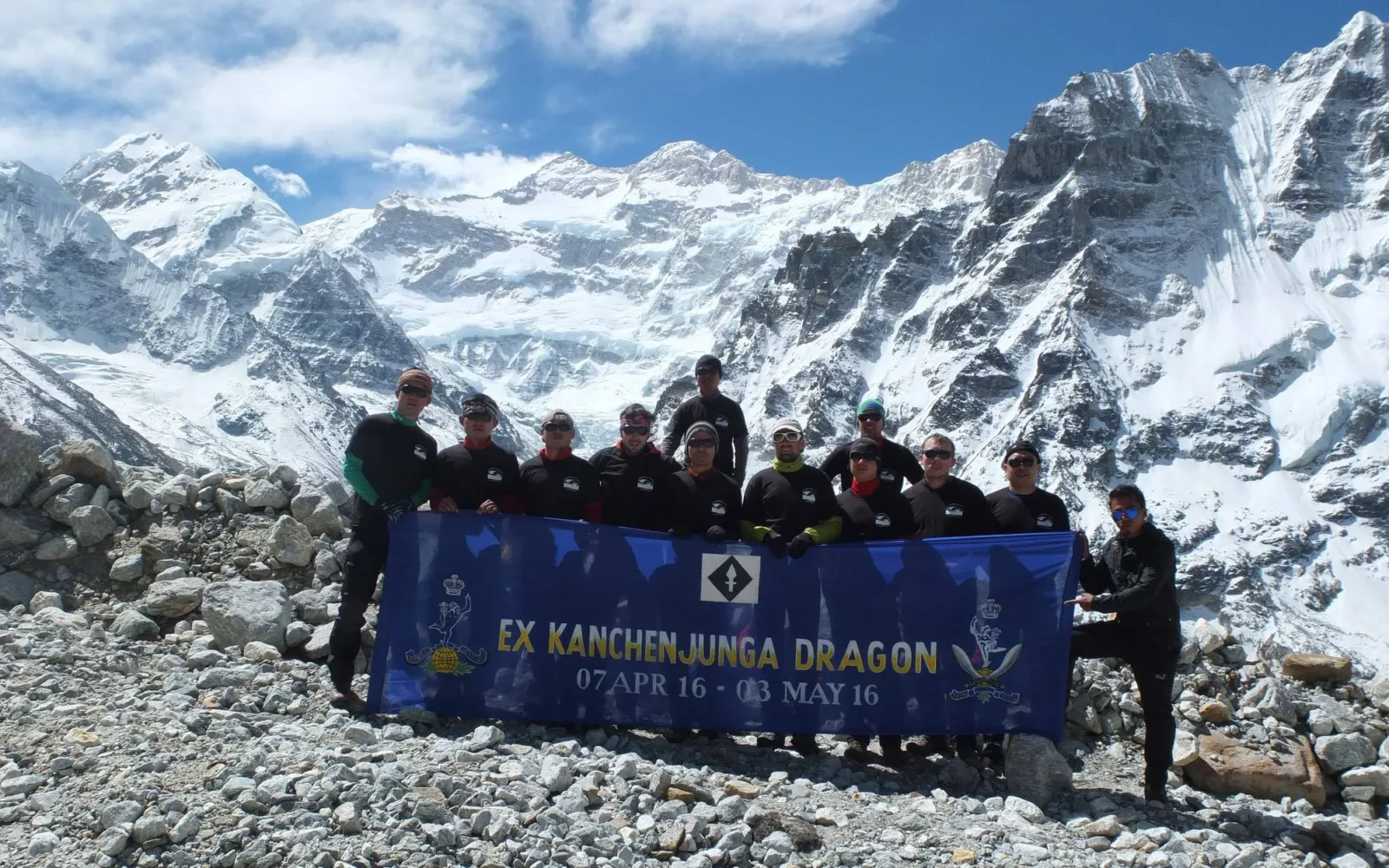
The pinnacle day of your trek. You will make an early morning push along the edge of the Kanchenjunga Glacier. Reaching Pangpema (North Base Camp) rewards you with unmatched, up-close views of the massive North Face of Mt. Kanchenjunga. After taking pictures, retrace your steps back to Lhonak.

Altitude: 5,143 m / 16,873 ft at Pangpema

Accomodation

Basic alpine teahouse

Meals

Breakfast, Lunch, Dinner

Time

7–8 hours walking

Distance

~18 km / 11.2 miles round-trip

Say goodbye to the high glacial basins and start your rapid descent. Walking back through Khambachen, the dense forest and thicker oxygen levels return as you descend back into the welcoming village of Ghunsa.

Altitude: 3,415 m / 11,204 ft

Accomodation

Teahouse

Meals

Breakfast, Lunch, Dinner

Time

6–7 hours walking

Distance

~19 km / 11.8 miles

Continue retracing your steps down the valley of the Ghunsa Khola. You will drop steadily through the bamboo jungles, passing through Gyabla before arriving back in Amjilosa.

Altitude: 2,498 m / 8,195 ft

Accomodation

Basic teahouse

Meals

Breakfast, Lunch, Dinner

Time

6 hours walking

Distance

~17 km / 10.5 miles

Complete your final few hours of foot travel down to Sekathum. At Sekathum, your trekking crew will load the gear into a waiting private local Jeep for the long drive back uphill to Taplejung. Celebrate the trek's completion with your crew in the evening.

Altitude: 1,820 m / 5,971 ft

Transportation: Private 4WD Jeep

Accomodation

Local guesthouse/hotel

Meals

Breakfast, Lunch, Dinner

Drive

4 hours drive

Time

3 hours walking

Distance

~9 km / 5.6 miles

Depart Taplejung early in the morning for the drive back down to the Bhadrapur airport. Catch your late afternoon domestic flight back to Kathmandu. Upon arrival, transfer back to your city hotel.

Altitude: 1,350 m / 4,430 ft

Transportation: Private Jeep + domestic flight + airport transfer

Accomodation

hotel in Kathmandu

Meals

Breakfast, Lunch, Farewell Dinner

This is the final day in Nepal. A chance to do some shopping, explore at leisure or merely relax by the hotel. We enjoy a final night together, reliving the trek and our extraordinary achievements.

Enjoy your final morning in Kathmandu shopping for souvenirs or relaxing. Check out of the hotel as your representative transfers you back to Tribhuvan International Airport for your international departure flight home.

Altitude: 1,350 m / 4,430 ft

Transportation: Private airport drop-off vehicle

Accomodation

N/A

Meals

Breakfast

Includes/Excludes

Includes

  • All ground transportation as per itinerary
  • 4 night Hotel accommodation in Kathmandu with B/B plan.
  • Both way domestic flight (KTM-BDR-KTM) for both member and guide with airport tax
  • Kangchenjunga National Park Entry fee
  • Special Restricted Area Entry fee
  • Food for the member during the trek (3 meals a day as per teahouse open menu, Tea, Coffee, Hot Chocolate, Hot Lemon, etc.) as per member’s choice
  • Teahouse accommodation on Twin sharing basis during the trek
  • Professional English Speaking Trekking Guide with his (salary, food, accommodation.)
  • Required local porters (Maximum luggage acceptable 15kg per member, 2 members will get 1 Local Porter)
  • All Nepalese staffs' insurance as per Nepalese government rules
  • Company service charge, VAT and government taxes etc.

Excludes

  • International flight with airport tax.
  • Nepalese Entry Visa fee
  • Food during stay in Kathmandu
  • All personal equipment and personal expenses
  • Photography Charges, Monument charges and Monument entry fees
  • Personal Medical and travel insurance(must cover helicopter rescue evacuation cost)
  • Personal Medicine
  • Telephone and internet charges
  • Laundry charges
  • Alcoholic beverage, bottled drinks and cold drinks during the trip
  • Rescue evacuation charges if required
  • Staffs and porters Tips...

Equipments

Clothing and Equipments List
» Pack to pack out - bring enough waterproof bags to carry all non-biodegradable rubbish back down the mountain.
» Remove all unnecessary packaging before leaving home.
» Bring enough warm dry clothes so that you can wrap up rather than burn firewood in the evenings.
» If you are going to trek higher than 5000m or you know it will be cold, buy an aluminum water bottle which can also be used as a hot water bottle at night.
» The easiest way to keep hydrated while trekking is to buy a 1 x liter platypus-drinking bladder to carry in your day pack.
» Make sure to buy proper trekking socks. Don’t buy synthetic socks as these promote sweating and can give you blisters. Always carry a few blister pads in your first aid kit and keep them handy in your day pack.
» Walking poles are very useful while trekking and helpful when descending.
» Please remember that waste disposal and recycling facilitates are limited in Nepal. When buying batteries make sure they are rechargeable and/or high quality so they last longer, and take them home to recycle.

More Lists
There is no definitive list. What you bring will vary according to the area, time of year and the length of your trek. Below is a suggested check list which you should adapt to your own needs. Ask yourself: Will there be snow/how long /high is the trek/are we camping?

» Good quality trekking boots with ankle support
» Lightweight shell/raincoat with hood
» Detachable fleece liner or separate fleece
» Fleece trousers
» Shorts and / or convertibles trousers- quick drying
» Sunglasses
» Sun hat and warm hat(good quality)
» Gloves
» Spare T-shirt x 3
» Sweat towel x 2
» Spare socks x 3 ( walking sock and thin inner sock)
» Small day sack
» Sun cream
» Small water bottle aluminum doubles as a hot water bottle.
» Iodine or water purifying kit,
» Soluble vitamin tablets to taste water or powder fruit drink
» Talcum powder
» Walking sticks or Trekking poles(good quality)
» Camp shoes/trainers/flip flops to wear in evening.
» Spare underwear 3
» Toilet kit
» Tissues
» Pen knife
» Bum bag
» Head torch(good quality)
» Biodegradable washing liquid / soap
» FILM
» CAMERA
» Ear plugs
» Sleeping bag liner(good quality)
» Sleeping bag(good quality-30)
» Bin bag/ gasbag to keep kit dry
» Small towel
» Lip balm
» Available in KTM

Personal First Aid (Aids Kit)
» Antiseptic
» Bandages
» Blister plasters
» Decongestant
» AMS medication like Diamox
» Eye drops – it can get very dusty on trails
» Paracetamol and/or ibuprofen
» Rehydration sachets, Imodium and antibiotics for traveler’s diarrhea
» Scissors
» Sterile dressing
» Sticking plasters and tape
» Throat lozenges / sweets
» Tweezers
» A sewing needle etc.

This trekking equipment list has been prepared by Adventure Zambuling Treks (P) Ltd.

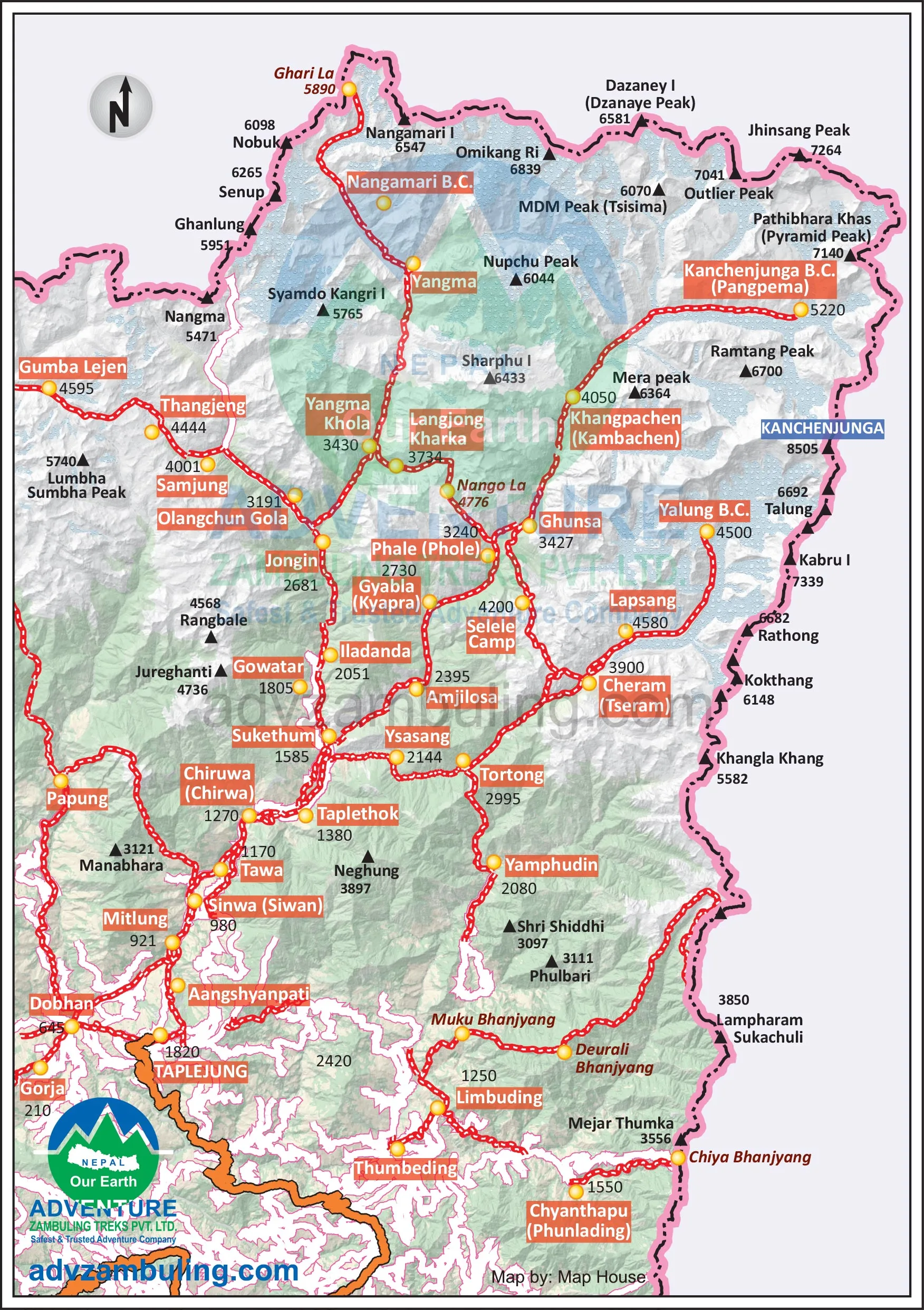
Map

Reviews

0
0 out of 5 stars (based on 0 reviews)
Excellent
Very good
Average
Poor
Terrible

There are no reviews yet. Be the first one to write one.

Write a review